"This is a huge blow for all harbors in South Central/Southern California." That line is from a slide in a May 22, 2026 dredging report presented to BEACON, the regional beach and sediment authority. It follows the news that the federal FY2027 budget request removed every dredging project run by the Army Corps of Engineers' Los Angeles District.
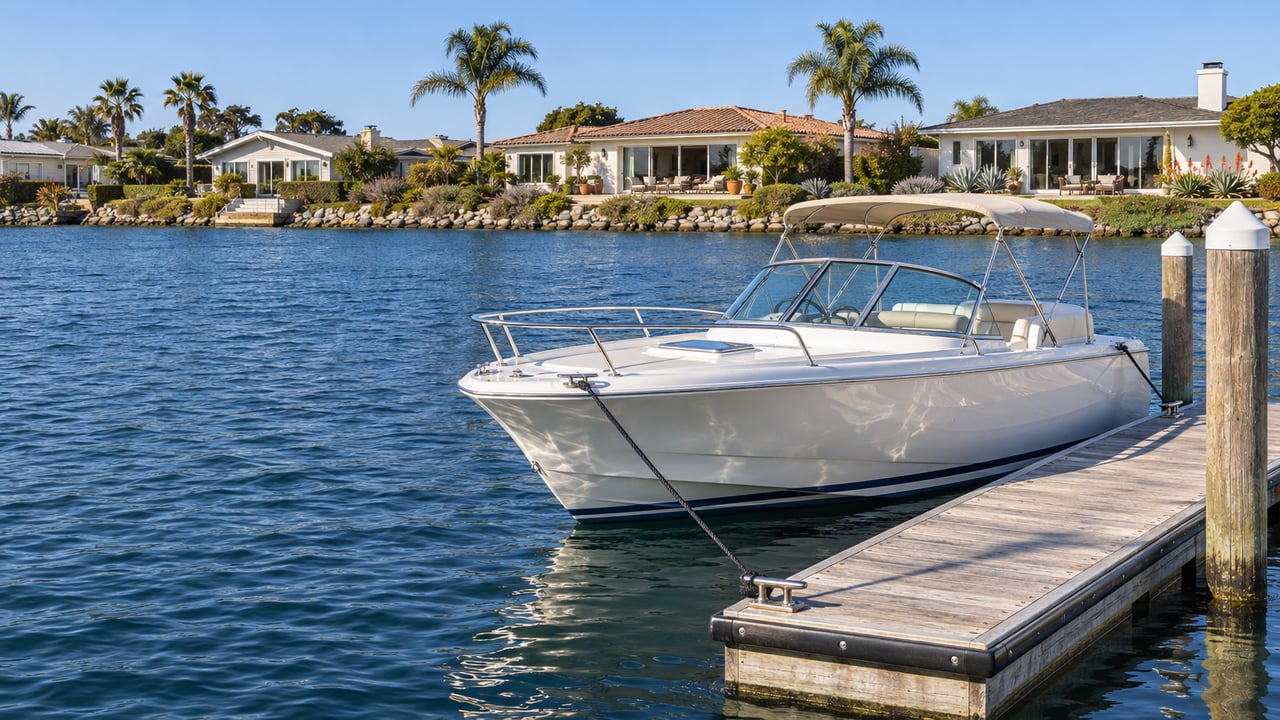
If you're looking at dock homes in the Ventura Keys, that slide is relevant to your purchase. To reach open water, a boat tied up behind a Keys house passes through two pieces of water that need regular dredging. Different public agencies pay for each one, and neither homeowner nor homeowners association controls either. This fall the two stretches are in very different shape, and the difference tells a buyer which one to watch.
A Tract Sold From the Water
The Ventura Keys started as a Pacesetter Homes project built from 1964 to 1969. According to the City of Ventura's Citywide Historic Context Statement, it covered 781 parcels around a man-made channel 160 feet wide that connected to the Ventura Marina and looped around an island and a peninsula. About 300 of those lots were on the water and had private slips.
The developers sold the Keys as a place you could reach by street or by water. The same study says buyers were sometimes toured through the tract by boat after sales opened in May 1964.
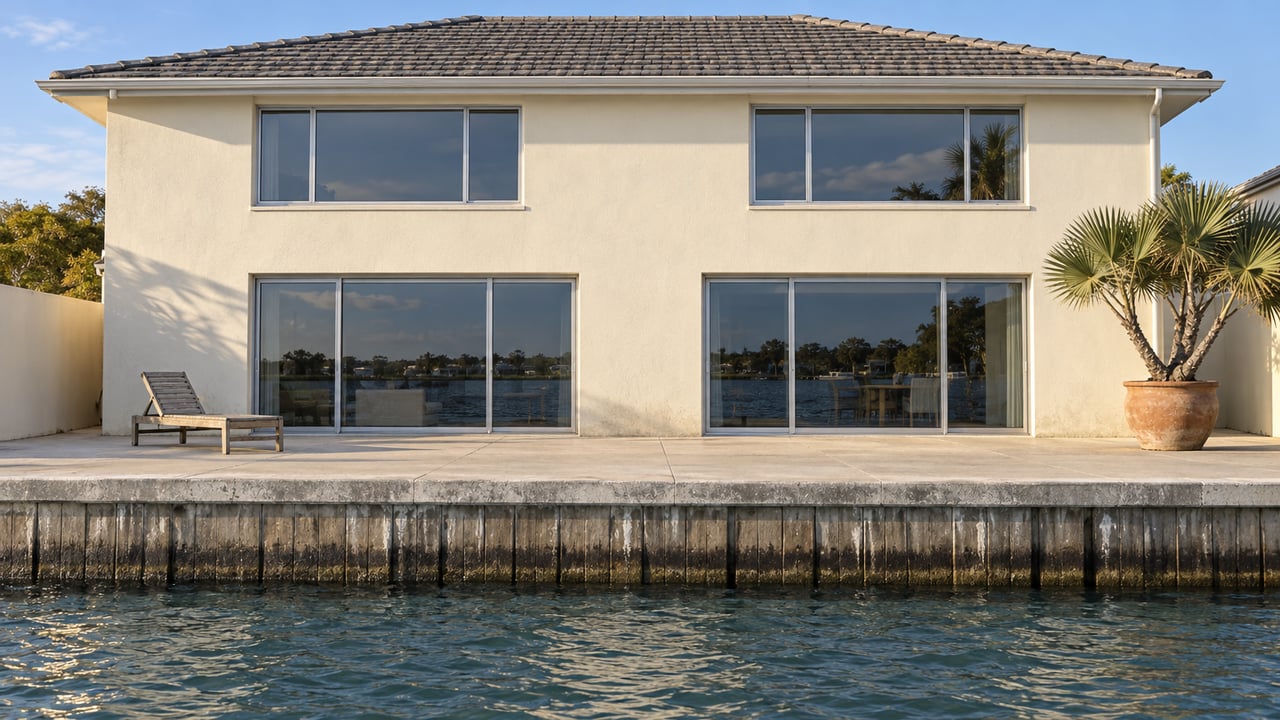
So most Keys homes don't have a dock, and the dock lots are the minority people pay extra for. What a buyer gets for that extra money depends on the water between the slip and the harbor mouth. That water has two stretches, and each one has its own source of money.
Stretch One: The Connector Channel and the Arundell Barranca
Ventura's inner harbor is not on an estuary, so most of it doesn't need routine dredging. The exception is the channel that connects the Keys to the harbor entrance. The Arundell Barranca drains into that channel and deposits about 6,000 cubic yards of material a year, according to the BEACON presentation. The same report says inner-harbor dredging usually happens every two to five years and removes about 30,000 cubic yards each time.
The last inner-harbor dredge was in 2024. In the September 16, 2026 board packet, Port District staff reported that a February hydrographic survey found inner-harbor conditions "remain excellent." They also wrote that no inner-harbor dredging appeared to be needed in 2026 or 2027 unless a very significant event deposited extreme amounts of material. The same packet lists the District's dredging reserves at $3,117,913.
Responsibility for this stretch is split. The Ventura Port District's dredging page says the District funds, permits and contracts inner-harbor dredging, and the City of Ventura works with the District to keep access to the Keys open. The 2024 cycle shows how the money moves. Port District records list a $79,321 payment to Manson Construction on May 1, 2024 for inner-harbor dredging into the Keys, and the City reimbursed that cost.
Separately from that routine cycle, the City has proposed a larger, longer-term project. A March 24, 2026 staff report on the FY 2027–2031 Capital Improvement Program added an "Advance Maintenance Dredging Area – Ventura Keys" project, number ST26-1293, to the City's Potential Grant Project List. The project would deal with future dredging in the Keys connector channel and is estimated at about $6 million. Staff said they were working on a U.S. Army Corps of Engineers Water Resources Development Act grant and planned to apply to the California Department of Boating and Waterways later in the year. In that report, the potential grant list holds projects waiting for grant money. A project moves into the funded capital program only after an award comes through. For the next year or so, then, the Keys connector channel is the stretch with a clean survey and a reserve behind it.
Stretch Two: The Federal Entrance
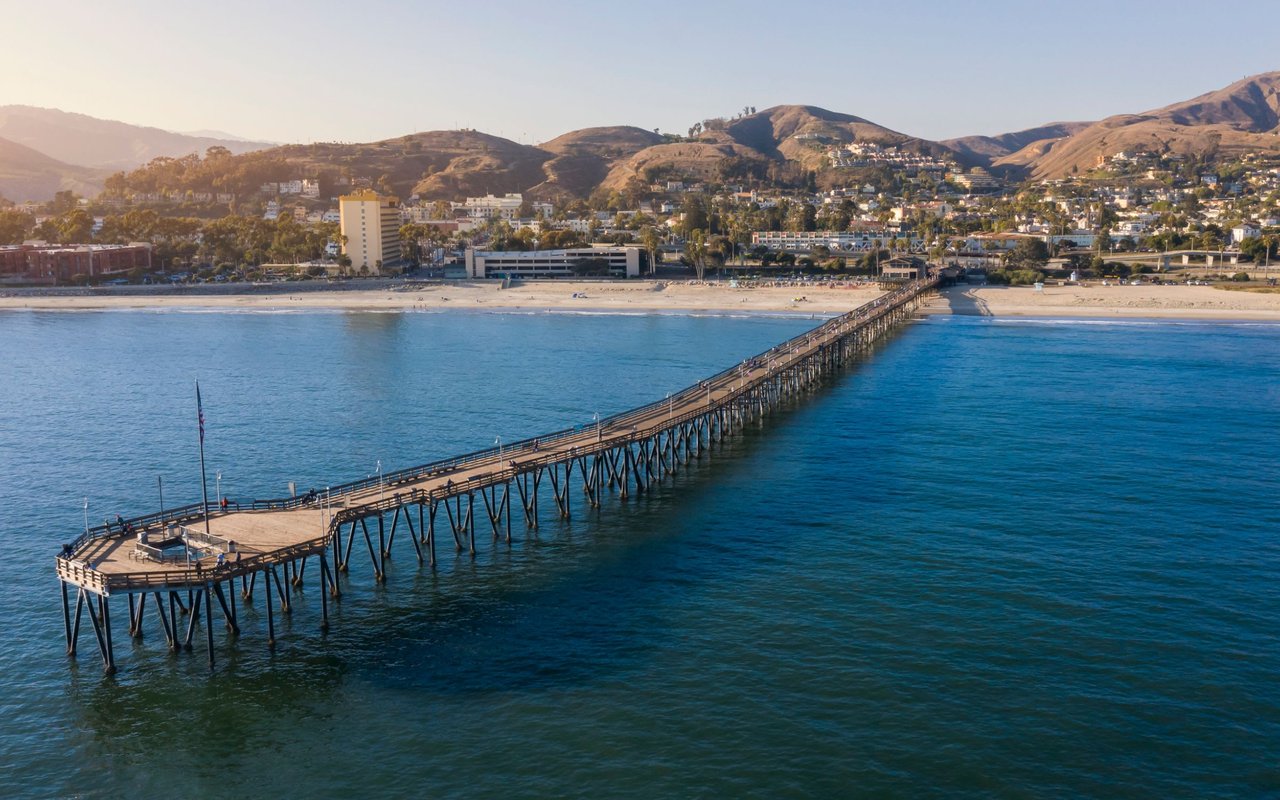
A cleared connector channel only helps if the harbor mouth is open too. The Army Corps of Engineers maintains the federal entrance channel. The Port District says the entrance and its sand trap need maintenance dredging every year, usually in the first quarter and depending on federal funding, because roughly 500,000 cubic yards of sand moves along this part of the coast each year.
The 2026 entrance dredge is finished. The Corps removed 349,000 cubic yards, according to the BEACON report. That season was paid for out of the prior budget year. KEYT reported that Ventura Harbor dredging money was in the FY2026 spending package signed January 23, 2026. The Corps' FY2026 work plan listed $5.98 million for Ventura Harbor operations and maintenance dredging.
The next cycle is less certain. Port District staff wrote in the board packet for May 6, 2026 that federal dredging money was not in the President's FY26-27 budget, that they were pursuing congressional earmarks, and that the District's Dredging Reserve Fund had been rebuilt to $3,000,000 in FY24-25. In Congress, the FY2027 House bill H.R. 9022 was introduced May 22, 2026. Its most recent action on Congress.gov is dated June 23, 2026. The continuing resolution that became law September 2, 2026 keeps most federal programs at FY2026 levels through December 11, 2026.
The September 16 packet adds more detail. Staff wrote that until a budget passes, the Corps cannot act to dredge Ventura Harbor, and that Senators Padilla and Schiff both submitted congressionally directed spending requests for it in the FY27 budget. Staff called inclusion in the Corps work plan generally the most secure way to get funded. They also wrote that the timing is poor because that money "will almost certainly be made available after the end of the dredging environmental window in 2027."
The entrance itself is being watched. On August 26, Harbor Patrol issued a safety notice about a growing shoal off the south jetty and put out a hazard buoy. The Corps said it would send a hydrographic survey team in October. The stopgap funding runs through December 11, and the entrance has usually been dredged between January and March.
Which Stretch to Watch This Winter
In the Keys, the recent bills for keeping the channels open have gone through public agencies: the Corps for the entrance, and the Port District and the City for the connector channel. For a Keys dock buyer this winter, the channel behind the house has a clean survey and a reserve behind it. The open question is the harbor mouth, and it depends on federal budget timing, not on the buyer, the seller or the house.
Oxnard's dock neighborhoods have their own history of waterway upkeep, which I covered in my post on the West Hemlock Street seawall repair. If you're weighing the Keys against an Oxnard dock home, my Mandalay Bay, Seabridge and Westport comparison covers that side of the coast.
What This Changes About Choosing a Keys Dock
The usual checks on a dock home still apply: slip length, the condition of the dock and the boat's dimensions. In the Keys, add the harbor's calendar to that list. When you're writing an offer between now and spring, find out whether the 2027 entrance work has funding and a start date, what the Corps' October survey of the south jetty shoal found, and whether the City's Keys project has moved off the grant list. The Port District posts its dredging updates and board packets on venturaharbor.com. The City's capital program reports are in its online document center.
The neighbors keep track of this as well. The Ventura Keys Association sends dredging notices to residents. It also installed a community dock at Big Beach on July 31, 2024. The Association said more than 200 neighbors came to its 2026 Annual Ventura Keys Fiesta at Big Beach on August 30, which had food, music, games and MadeWest beer. A buyer who wants to know what's happening with the channels can learn a lot from that group.
The harbor's boating community is close by. The Ventura Yacht Club was organized in 1938 and has its clubhouse and slips on the Ventura Harbor peninsula. It berths about 90 vessels and runs the Ventura Cup Regatta and the Christmas Parade of Lights every year. Members who keep boats in the harbor follow entrance conditions all year.
A Few Common Questions
Is the Keys connector channel in good shape right now? Port District staff reported in September 2026 that a February survey found inner-harbor conditions excellent and that no inner-harbor dredging appeared to be needed in 2026 or 2027 barring a very significant event. The Arundell Barranca adds about 6,000 cubic yards a year, so a big winter storm season could change that picture.
When does the harbor entrance usually get dredged? Usually in the first quarter of the year, depending on federal funding, according to the Port District. In 2026 the Corps removed 349,000 cubic yards.
Who paid for the last dredge into the Keys? The Port District paid Manson Construction $79,321 on May 1, 2024 for inner-harbor dredging into the Keys, and the City of Ventura reimbursed the District.
If you're thinking about a dock home in the Ventura Keys, I can walk the channel with you and check the dock against the boat you own or plan to buy. I'll also keep you updated on the Port District's 2027 dredging schedule while you decide. Reach me through Navigating You Home to request your free home valuation and neighborhood guide, or to set up a Keys tour from the water.